
- October 28, 2026
- Startup Portal
- 0 Comments
- Blogs
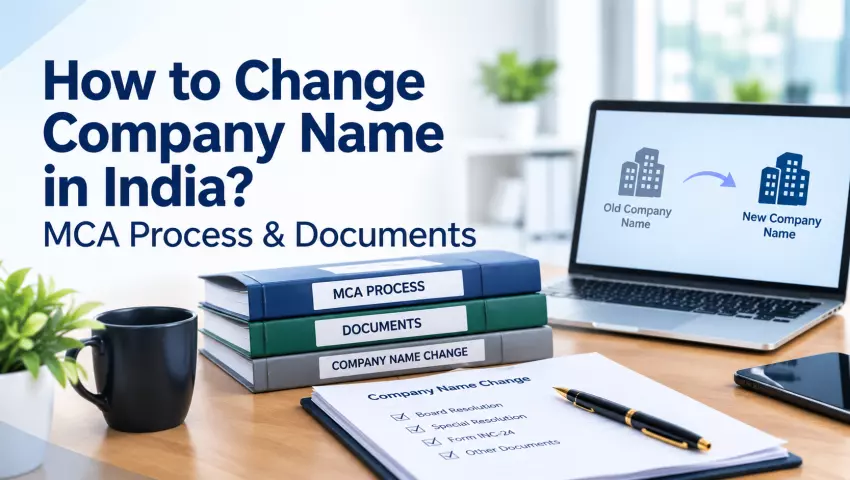
How to Change Company Name in India? MCA Process & Documents
Thinking about a company name change but not sure where to start? You’re not alone — whether you recently completed your online company registration in pune and need a rebrand, are shifting your business direction, or simply want to know How to Change Company Name in India without clashing with someone else’s trademark, the procedure for change of name of the company involves the Ministry of Corporate Affairs (MCA), a few statutory approvals, and a fixed set of forms. This guide walks through the entire process for change of name of company, step by step, along with the documents and timelines you’ll need.
This guide is brought to you by Startup Portal business services, with insights from our compliance experts Nikhil Rajarshi and Govind S. Jethani, who bring 8+ years of experience helping business owners with exactly this kind of process.
Why Companies Change Names?
Before we get into the procedure to change name of company, it helps to understand why businesses go through this in the first place:
- Rebranding — outgrowing an old identity or repositioning in the market
- Business pivot — the company’s actual line of business has changed since incorporation
- Private-to-public conversion (or the reverse) — a structural change that also affects the name
- Merger fallout — post-merger, one entity often needs a fresh identity
- Name conflict — resembling an existing registered company or trademark too closely
Whatever the reason, the procedure for changing the name of the company stays largely the same — MCA approval, shareholder consent, and statutory filings.
Legal Basis: What the Companies Act Says?
The change of name of company procedure is governed by Section 13(2) read with Section 4(2)/(3) of the Companies Act, 2013, along with Rules 8 and 29 of the Companies (Incorporation) Rules, 2014.
In plain terms: a company’s name can only be altered by passing a special resolution, and it needs the approval of the Central Government — a power that’s been delegated to the Registrar of Companies (RoC). So this isn’t a simple internal decision; it’s a two-part approval process involving both your shareholders and the regulator.
When Can and Can't a Company Change Its Name?
Valid, common scenarios for a name change include a rebrand, a change in business line, converting from private to public (or vice versa), and resolving a conflict with an existing company name or registered trademark.
Rule 29(1) restriction — when you’re blocked: A name change isn’t allowed if the company has defaulted in filing its annual returns or financial statements, or has defaulted in repaying matured deposits or debentures (or the interest on them). If your compliance filings are pending, sort those out first — MCA won’t process the name change until they’re clear.
What makes a proposed name unacceptable under Section 4(2)/(3):
- Identical or too closely resembling an existing company’s name
- Names implying a false connection with the Central Government, a State Government, or any local authority
- Names that would constitute an offence under any other law, or are otherwise considered undesirable
Step 1: Board Resolution to Initiate the Process
The first formal step in the procedure for name change of a company is a board resolution. The Board of Directors passes a resolution approving the intent to change the company’s name and authorises a director to apply for name reservation on the company’s behalf.
This happens before shareholder approval — the board is essentially setting the process in motion and locking in a proposed name before asking shareholders to formally approve it.
Step 2: Reserve the New Name via RUN (Reserve Unique Name)
Once the board resolution is passed, the company applies for name reservation through the RUN (Reserve Unique Name) web service, filed with the Central Registration Centre (CRC), Ministry of Corporate Affairs.
A few practical points to keep in mind:
- You can propose up to two names per attempt
- If both are rejected, you get one resubmission chance with two fresh names
- Before applying, always check your proposed names against existing company names and registered trademarks — this single step avoids wasting your limited attempts
- Once approved, the reserved name is valid for a defined window, so the rest of your name change of company procedure should be planned around that timeline
Step 3: Shareholder Approval via Special Resolution
With the name reserved, the company must get shareholder approval. This is done by convening an Extraordinary General Meeting (EGM) — or, where permitted, through postal ballot or video conferencing.
At the EGM, shareholders pass a special resolution approving the new name and the consequent alteration of the Memorandum of Association (and the Articles of Association, if needed). This is a mandatory step in the procedure for change of name of a company — the board alone cannot approve this change.
Step 4: File the Required Forms with MCA
This is the core filing stage in the procedure of change of name of company:
- Form MGT-14 — filing the special resolution and the altered Memorandum of Association, within the prescribed timeline from the date of the EGM
- Form INC-24 — the application to the Registrar of Companies seeking approval of the name change and issuance of a fresh Certificate of Incorporation
Documents typically attached to these filings:
- Notice of the EGM along with the explanatory statement
- Certified true copy of the special resolution
- Altered Memorandum and Articles of Association
- Minutes of the general meeting and the attendance sheet
- Director’s affidavit confirming compliance with Rule 29
Step 5: Certificate of Incorporation with the New Name
Once MCA processes the INC-24 application, it issues a fresh Certificate of Incorporation reflecting the new name. This is the point that actually matters legally — the name change becomes effective only from the date of this new certificate, not from the date of the EGM or the special resolution. Until you hold this certificate in hand, your company’s legal name hasn’t changed yet.
Documents Checklist:
Here’s a consolidated list of what you’ll need through the entire procedure for company name change:
- Board resolution copy
- RUN application and approval confirmation
- Special resolution along with EGM notice and minutes
- Altered MOA and AOA
- Director’s affidavit (Rule 29 compliance declaration)
- Proofs for updating PAN, GST, and other registrations (actioned after approval)
After the Name Change: What Else Needs Updating?
Getting the new Certificate of Incorporation isn’t the finish line — there’s follow-up compliance required under Section 12 of the Companies Act:
- Update the company name and registered office address on all business communications — letterheads, invoices, notices, and official publications
- Update statutory registrations: PAN, GST, EPFO, ESI, bank accounts, and any other licenses or registrations held in the old name
- Put up the new name on signage at every place the company does business, in legible letters
Skipping this step is one of the most common oversights after a change of name of the company procedure — companies complete the MCA filings but forget the downstream registration updates, which can cause mismatches later.
Timeline and Cost Overview:
A rough sequencing for the procedure to change company name:
RUN approval → EGM → MGT-14/INC-24 filing → new Certificate of Incorporation
Government fees apply at each stage — the RUN application carries its own fee, and each MCA form filing (MGT-14, INC-24) has its own prescribed fee based on the company’s authorised capital. The overall timeline depends heavily on how quickly the RUN name gets approved and how promptly the EGM and subsequent filings are completed — delays at any single stage push out the whole process, so it pays to have documents ready in advance.
Common Mistakes Companies Make:
- Proposing a name too similar to an existing company or trademark, wasting a RUN attempt
- Missing the filing window for MGT-14 and INC-24 after the EGM
- Forgetting to update GST Registration, PAN, and other registrations once the new certificate is issued
- Attempting a name change while in default on annual filings — this gets blocked outright under Rule 29(1)
Conclusion:
The procedure for change of name of company isn’t complicated once you know the sequence — board resolution, RUN name reservation, shareholder approval via special resolution, the MGT-14 and INC-24 filings, and finally the fresh Certificate of Incorporation. But each stage has its own documentation requirements and timelines, and a mistake early on (like a rejected RUN name or a compliance default) can delay the entire process.
If you’d like expert help managing your RUN application and filings correctly the first time, visit Startup Portal Business Services to explore our end-to-end legal and corporate services. Our expert team — led by Nikhil Rajarshi and Govind S. Jethani — can guide you through the entire name-change process without the back-and-forth. If you’re setting up a new entity altogether rather than renaming an existing one, our Company Registration in Pune service can help you get started with the right name and structure from day one. Have questions or ready to begin? Contact us today to speak directly with our compliance experts!