
- December 29, 2025
- Startup Portal
- 0 Comments
- Blogs
ISO Certification Types in India: Which One Is Right for Your New Company?
Starting a new company in India is a thrilling journey. You are full of ideas and energy! But to truly grow and compete, both locally and globally, you need to build trust and ensure top quality. That’s where ISO certification in India comes in. This guide will break down the essential ISO certification types in India for startups. We will help you choose the right one for your business. For seamless guidance on this journey, especially for those in the Pune region, remember that Startup Portal – Best Company registration Consultant In Pune features experts like Nikhil Rajarshi and Govind S. Jethani. They can simplify your path to certification.
What is ISO full form in India?
ISO stands for the International Organization for Standardization. It is an independent, non-governmental, international body. It develops and publishes international standards. An ISO mark or ISO certificate is a seal of approval. It shows that your company meets specific international standards. It’s not the ISO itself that certifies you. It is done by independent third-party ISO certifying bodies in India.
Why ISO Certification Matters for New Companies in India?
Getting ISO certification early is a strategic move for any startup.
- Boosts Credibility: It instantly builds trust with customers and suppliers. They know you follow global best practices. This is crucial for new companies.
- Opens Doors to Business: Many tenders, government contracts, and large companies demand ISO-certified suppliers. Having an ISO certificate full form of quality (like ISO 9001) is often non-negotiable.
- Improves Efficiency: Implementing ISO standards list requirements forces you to streamline your processes. This reduces errors and waste. It saves you money in the long run.
- Aids in Global Trade: For startups looking at international markets, an ISO certified company list membership is a globally recognized asset.
Types of ISO Certifications in India for Startups:
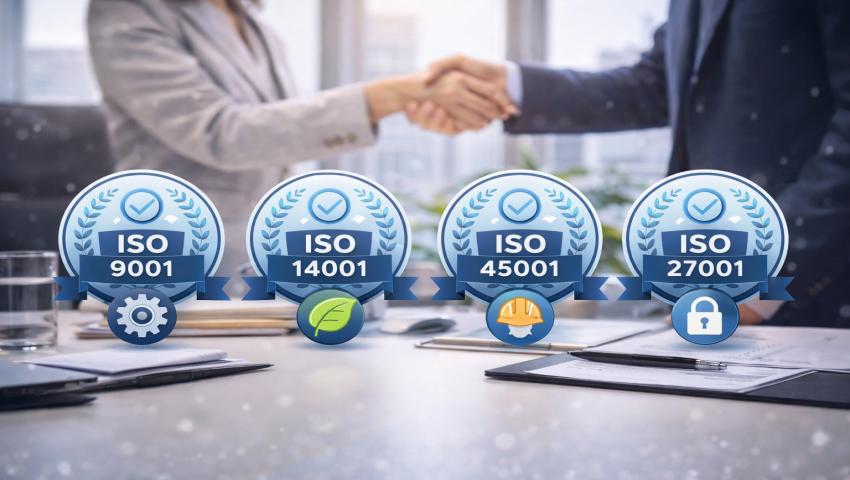
- ISO 9001 – Quality Management System (QMS): Ensures consistent quality in products and services. Suitable for all companies – manufacturing, IT, service providers, and consultants.
- ISO 14001 – Environmental Management System (EMS): Focuses on reducing environmental impact. Ideal for manufacturing, construction, energy, and eco-conscious firms.
- ISO 45001 – Occupational Health & Safety Management System (OHSMS): Ensures workplace safety and reduces risks. Best for manufacturing, logistics, construction, and high-risk industries.
- ISO 27001 – Information Security Management System (ISMS): Protects sensitive data and information. Suited for IT, SaaS, fintech, e-commerce, or any company handling confidential data.
- ISO 22000 – Food Safety Management System (FSMS): Ensures food safety throughout the supply chain. Recommended for restaurants, food processing units, packaged food sellers, and food supply chains.
- ISO 13485 – Medical Devices Quality Management System: Ensures the quality and safety of medical devices. Perfect for manufacturers and suppliers of medical equipment and devices.
Other Important ISO Certification Types:
The iso standards list is vast. Depending on your niche, other standards might be right:
- ISO 50001 (Energy Management System – EnMS): For companies focused on reducing energy consumption.
- ISO 26000 (Social Responsibility): This is a guidance standard, not a certification. It helps you manage social responsibility better.
- ISO 28000 (Supply Chain Security): For companies with complex, high-value supply chains.
How to Choose the Right ISO Certification for Your New Company?
Choosing the right certification from the long iso certificate list is the first step. Here’s a simple process:
- Identify Your Core Business Priority:
- Quality First: If you need to establish fundamental business processes and customer focus, start with ISO 9001. It is the baseline.
- Data is Key: If your startup is IT-based and handles sensitive data, ISO 27001 should be a top priority along with ISO 9001.
- Industry-Specific Needs: If you are in food, healthcare, or heavy industry, those niche ISO series standards (like ISO 22000 or ISO 13485) are a must.
- Consider Your Target Market:
- Government Tenders: Check the tender requirements. They often specify which iso certification types are needed.
- Export Markets: If you plan to export, international clients will definitely look for ISO certificates.
- Large Corporate Clients: Many large iso certified companies in India require their vendors to be ISO compliant.
- Start Small, Scale Up: You don’t need all types of ISO certifications at once.
- Start with a simple, high-impact one like ISO 9001.
- Once that system is stable, integrate other standards like ISO 14001 or ISO 45001. This phased approach is easier for a new company’s budget and resources.
ISO Certification Cost in India:
The price of ISO 9001 certification and other ISO certification list items is not fixed. It depends on several factors:
- Company Size: The number of employees. More employees mean a longer audit time and higher cost.
- Type of Standard: Complex standards like ISO 27001 usually cost more than simpler ones like ISO 9001.
- Certification Body: Fees charged by the specific ISO certification organization (Registrar).
- Consultant Fees: The cost of the consultant who prepares your documentation.
- Average Estimate: For a small startup (1-20 employees) in India, the total cost for ISO 9001 can range from ₹20,000 to ₹60,000. For a more complex standard like ISO 27001, the cost will be higher, potentially starting at ₹1,00,000.
Time Required for ISO Certification:
The time taken for ISO certification in India also varies.
- Small Company: If you are well-prepared, it can take as little as 7 days to 30 days after all documentation is ready.
- Complex or Larger Setup: This can take 2-6 months to fully implement the system and complete the audit.
The ISO Certification Procedure: How to Obtain ISO Certificate?
Wondering how to get ISO certification for a company? The process is a series of simple steps.
- Selection: Choose the right ISO standard (ISO certification types).
- Gap Analysis: The consultant checks your current operations against the chosen ISO requirements. They find the ‘gaps’.
- Documentation & Implementation: You create the necessary documents, policies, and procedures (ISO registration certificate documentation). You train your staff on these new processes.
- Internal Audit: You conduct your own audit to check if the new system works.
- Management Review: Top management reviews the system performance.
- Certification Body Audit: A recognized ISO certification body in India conducts a two-stage audit.
- Stage 1: Documentation review.
- Stage 2: On-site audit to see if you are following the documents.
- Certification: If successful, you receive your ISO registration certificate, generally valid for three years.
Common Mistakes New Companies Make During ISO Certification:
To successfully get your certification of ISO, avoid these common traps:
- Treating it as just paperwork: ISO is about changing how you work. Do not just create documents for the auditor. Focus on true improvement.
- No Top Management Buy-in: The ISO system fails without the complete commitment of the management. They must drive the change.
- Selecting the wrong Standard: Choosing a standard that is not relevant to your business (e.g., getting ISO 22000 for a pure IT company).
- Ignoring Employee Training: The system is run by your people. They must understand the ISO latest ISO standards and their role.
Tips to Maintain ISO Certification Successfully:
Receiving the certificate is just the start. Your ISO certified organization must maintain its standards.
- Regular Internal Audits: Conduct internal checks frequently. This ensures continuous compliance.
- Management Review: Hold regular meetings to review the system’s performance.
- Continuous Improvement: Always look for ways to make your processes better. This is the core principle of ISO 9001.
- Stay Updated: Keep up with any changes to the certification standards or the ISO series that you hold.
Choose the Best ISO Consultant in Pune - Startup Portal:
For a new company, managing the ISO certification procedure alone can be overwhelming. A good consultant can simplify the process, save you time, and ensure you comply correctly. If you are a startup in Pune or anywhere in India, look for consultants with deep experience working with startups.
Startup Portal recommends consulting with experts like Nikhil Rajarshi and Govind S. Jethani. They have a proven track record of guiding new companies through the ISO journey quickly and effectively. They can help you figure out exactly how to apply for ISO certification and which of the ISO certification types is the right fit. Visit the Startup Portal for more guidance and to connect with top-rated consultants in Pune and across India who specialize in helping startups achieve their certification goals efficiently.
Conclusion: Your Path to Becoming an ISO Certified Company in India
Obtaining the right ISO certification in India is an investment, not an expense. It secures your future by ensuring quality, consistency, and global credibility. By understanding the different ISO certification types—especially ISO 9001, ISO 27001, and the relevant industry-specific standards—you can confidently take your new company to the next level.
Start your journey today. Get your company certified and watch your business grow! Need to know more about the full form of the ISO mark or the list of ISO certified companies? Contact the experts at Startup Portal today!