
- February 19, 2026
- Startup Portal
- 0 Comments
- Blogs
What is Limited Liability Partnership(LLP)?
Starting a business in India is exciting, but picking the right legal name can be tricky. Should you pick a traditional partnership or a big company? Startup Portal Business Services is here to help you understand the Limited Liability Partnership (LLP)—the easiest and safest choice for most new entrepreneurs.
This guide is prepared by Govind S. Jethani and Nikhil Rajarshi, experts at Startup Portal Business Services with over 10 years of experience in helping startups register their dream businesses.
What is a Limited Liability Partnership?
If you are asking what is limited liability partnership, think of it as a mix between a local partnership and a private company.
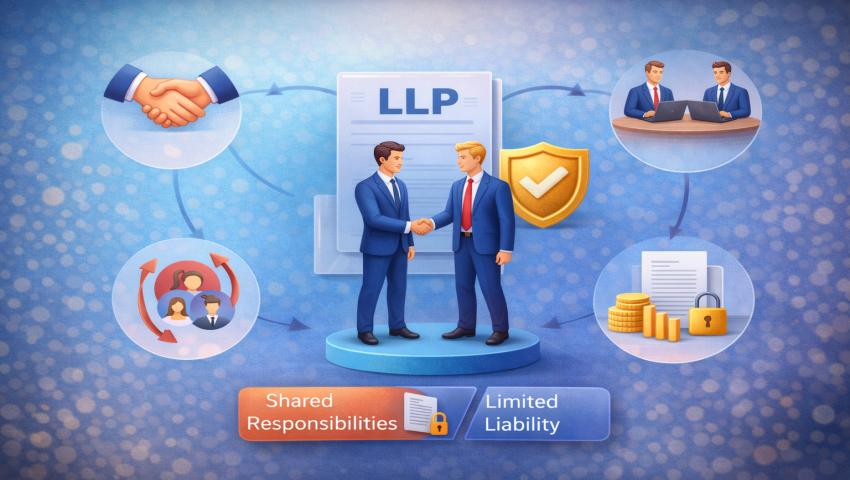
- The LLP meaning is simple: it is a business where you have partners, but your personal bank account, home, and car are safe if the business faces a loss. In a regular partnership, you might lose your personal savings to pay business debts, but in a limited liability partnership company, only the money you put into the business is at risk.
LLP Full Form and Basic Meaning:
The llp full form is Limited Liability Partnership. In the world of business, the llp meaning in business refers to a “body corporate.” This means the business is like a separate person in the eyes of the law. It can own its own property and have its own bank account.
Key Features of an LLP:
What makes a registered limited liability partnership special? Here are the easy-to-understand features:
- Its Own Identity: An llp partnership is separate from its owners.
- Safety Net: Your liability (risk) is limited. You aren’t responsible for a partner’s mistakes.
- Stays Alive Forever: The llp company continues to exist even if a partner leaves or passes away. This is called “perpetual succession.”
- No Minimum Money Needed: You can start a limited liability partnership firm with as little as ₹1. There is no rule saying you need lakhs of rupees to start.
Benefits of LLP for Your Business:
Why do the experts at Startup Portal Business Services recommend this?
Low Cost
It is much cheaper to register and run an llp business than a Private Limited Company.
Less Paperwork
You don't have to deal with heavy audits every year unless your business becomes very large (usually over ₹40 Lakhs turnover).
No Limit on Partners
You need at least 2 partners to start, but there is no limit on how many people can join later.
Easy to Manage
You can run the business your way by writing your own rules in an "LLP Agreement".
Disadvantages & Limitations of LLP:
While there are many benefits of Limited Liability Partnership, it is important to know the limitations before you start:
- Difficulty in Raising Funds: If you plan to get funding from Venture Capitalists (VCs), an llp business might not be the best choice. VCs usually prefer “Private Limited Companies” because they can easily buy shares, which isn’t possible in an LLP.
- High Penalties for Late Filing: Although an llp limited liability partnership has less paperwork, the fines for missing a deadline are high.
- Higher Tax Rate: An LLP is taxed at a flat rate of 30%, which can sometimes be higher than the tax rates for small private companies.
- Public Disclosure: Your business’s financial accounts and partner details are filed with the MCA (Ministry of Corporate Affairs) and can be seen by the public
How Does an LLP Work?
Running an LLP partnership is designed to be straightforward. Once you complete your LLP Registration, the business operates based on a legal document called the LLP Agreement. This agreement is like a rulebook that decides how much money each partner brings, how profits are shared, and who makes the big decisions.
In daily business, llp partners can act as managers. Unlike a private company, there is no need to appoint a separate board of directors. One partner’s decision can bind the llp company, but here is the best part: if one partner makes a mistake or commits fraud, the other partners are not personally responsible. The registered limited liability partnership itself is responsible for its debts, keeping your personal assets safe.
Who Can Form an LLP?
Individuals:
Any person over 18 years of age and of sound mind.
Minimum Partners:
You need at least two partners to form a limited liability partnership company.
Indian Residents:
At least one "Designated Partner" must be a resident of India.
Body Corporates:
Existing companies or even other LLPs can become partners in a new registered limited liability partnership.
Professionals:
It is a favorite for Doctors, CAs, Lawyers, and Consultants who want to work together without risking their personal wealth.
Conclusion:
So, LLP stands for a smarter way to do business in India. It gives you the “Limited Liability” of a big company but the “Partnership” feel of a small team. Whether you call it a limited liability partnership company or just an LLP, it is the best way to grow without the stress of losing your personal belongings. If you want to make sure your meaning of llp is legally strong, getting professional help for registration is key.
Ready to Register Your LLP?
Don’t let legal paperwork slow down your startup dreams. Whether you need a registered limited liability partnership or just want to understand the llp company meaning for your niche, the experts at Startup Portal Business Services are here to help.
With years of experience, Startup Portal have simplified LLP registration for hundreds of entrepreneurs. We handle the DSC, Name Approval, and the LLP Agreement so you can focus on growth.
- Get a Consultation Now
- Call/WhatsApp: +918975400253 / +917249645760